"Pipeline approach" developed for voting research by UMD faculty improves the accuracy of survey responses
Data from the 2024 American National Election Studies has been released. These data - which form the basis for thousands of papers - are stronger because of an approach developed by CDCE faculty.

The American National Election Studies (ANES) has released data from its 2024 survey. The ANES is a really (really!) big deal in political science. It asks a large sample of voters a multitude of questions about their opinions and actions related to the most recent election. The results from this survey form the basis for thousands of academic papers and help anchor America’s understanding of public opinion.
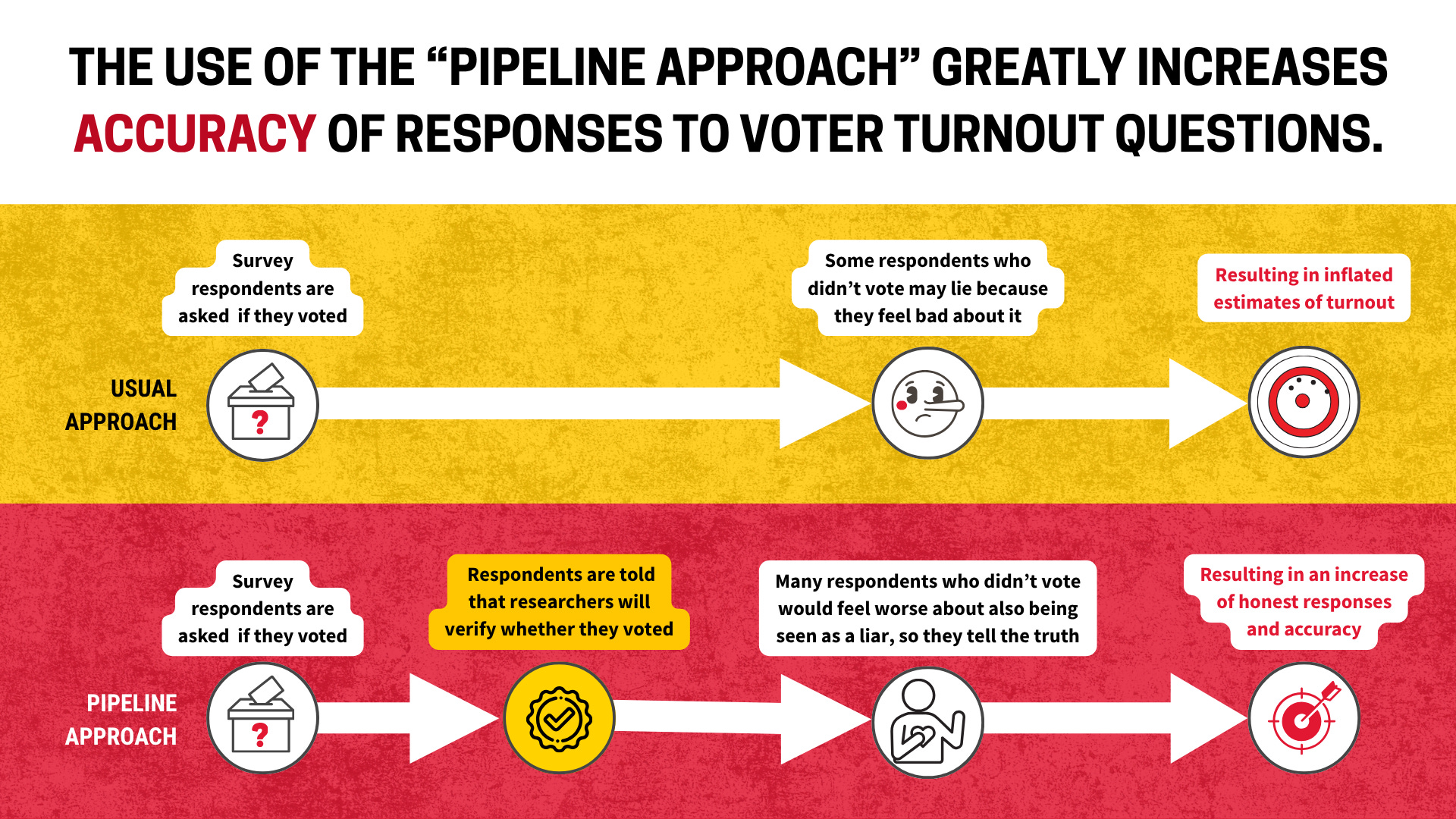
The survey this year is stronger because it uses the “pipeline approach” developed for voter turnout questions by CDCE Faculty Mike Hanmer and Antoine Banks along with Ismail White. The “pipeline approach” is a strategy for addressing the tendency of some survey respondents to say they voted in elections when they actually did not vote. This type of “reporting bias” where survey respondents say they engaged in socially desirable actions that they did not actually take occurs across the social sciences. And in 2014, Mike, Antoine, and Ismail published an important paper “Experiments to Reduce the Over-Reporting of Voting: A Pipeline to the Truth” (later selected for the Political Analysis Virtual Issue: Greatest Hits) which showed that the “bogus pipeline” strategy, used widely to improve research in psychology, could also be applied in political science.
The “pipeline approach” involves telling survey respondents that the researchers have a way of checking to see if they are lying in survey responses. In psychology, researchers will sometimes imply they have an ability to verify responses that they do not actually have. In political science, however, scholars studying voter turnout actually can (and often do!) verify survey responses about voting using public voting records. In the case of asking about voter turnout in the ANES, researchers are both claiming to be able to find out the truth and actually can find out whether people voted using public voting records. So, the “bogus pipeline” strategy is renamed as the “actual pipeline” approach, since researchers have an actual pipeline to the truth about respondents’ behavior.
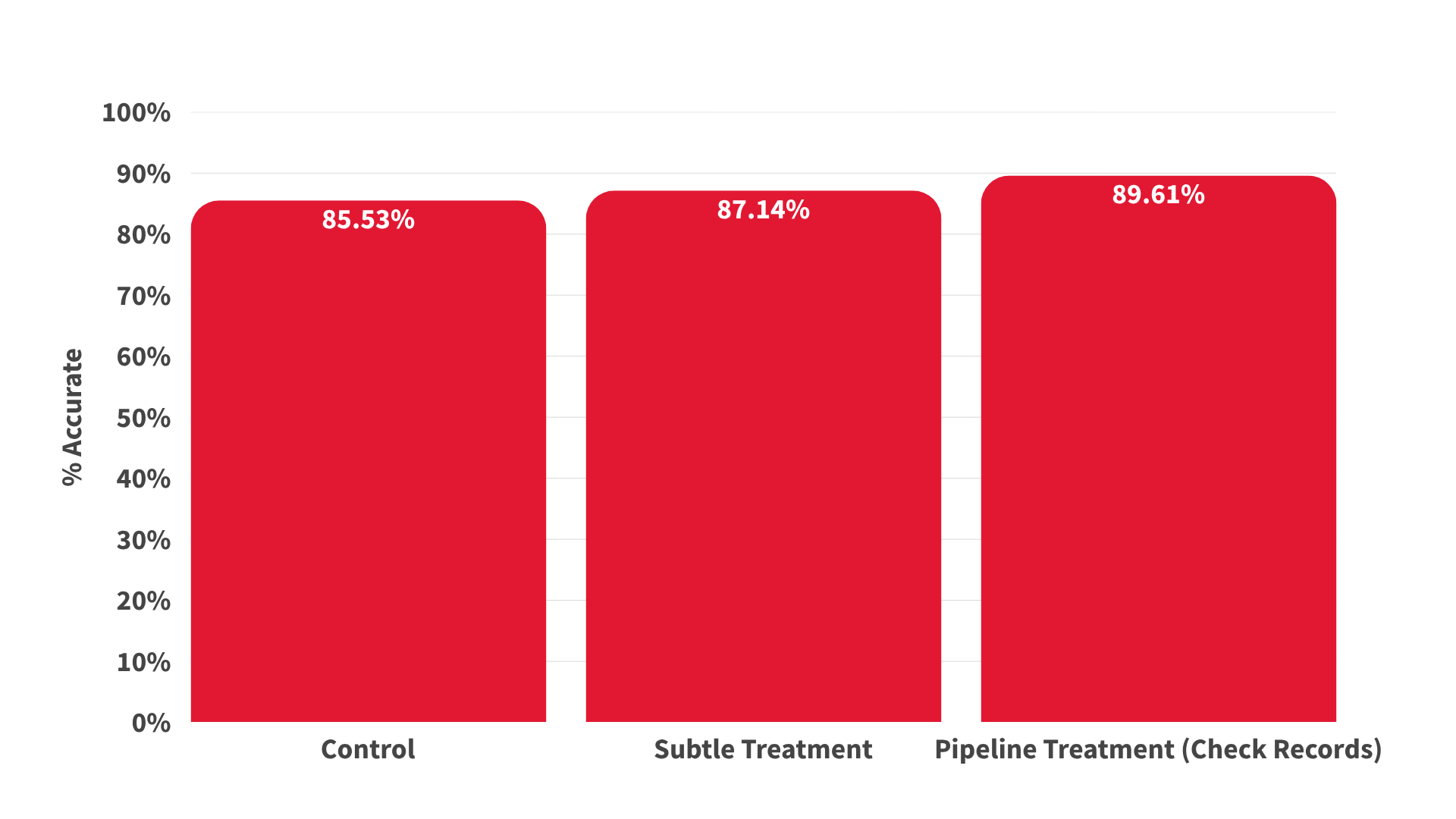
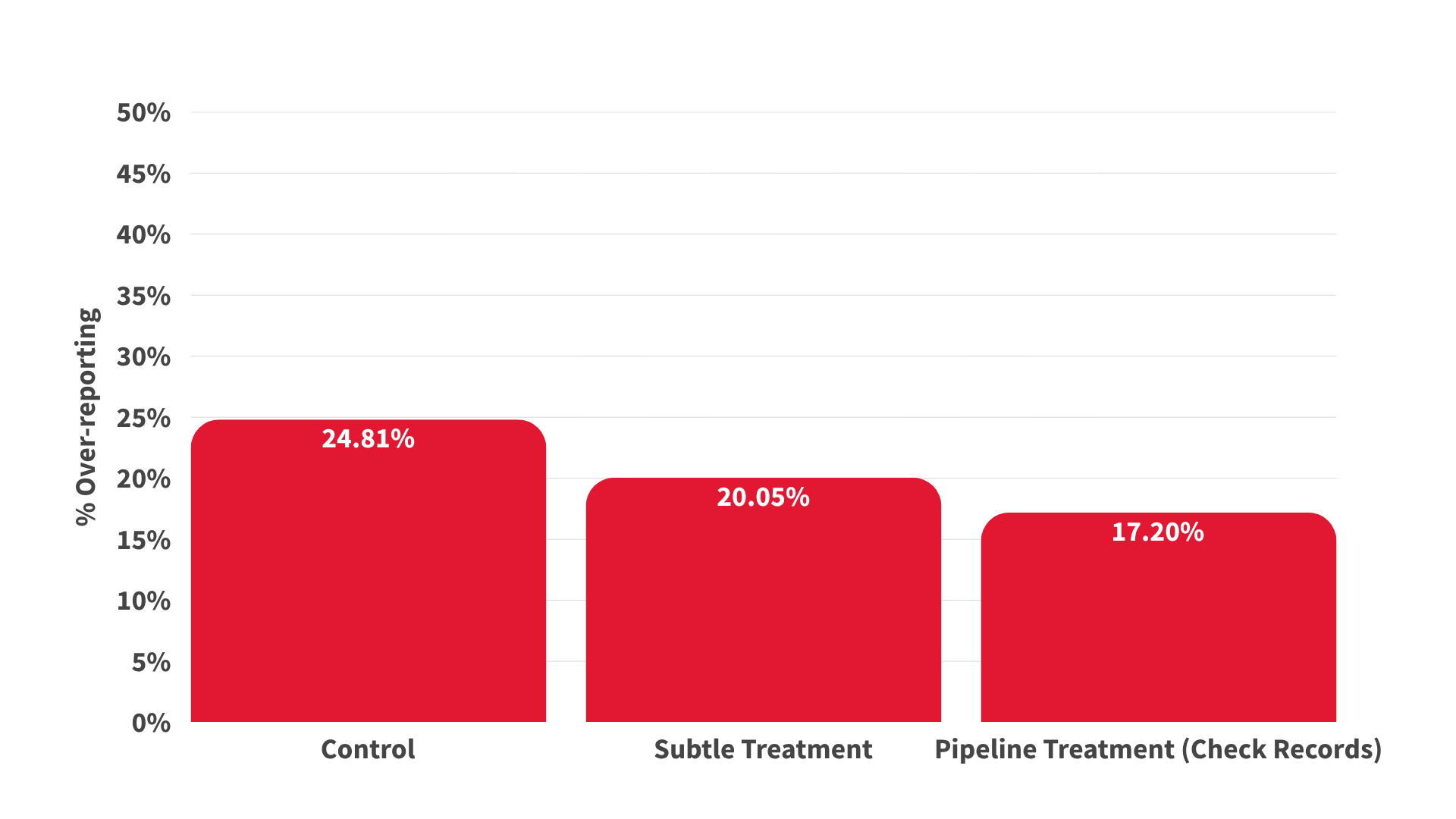
Mike, Antoine, and Ismail showed in their 2014 article that the pipeline approach can dramatically increase the accuracy of survey responses to questions about voter turnout. And this paper has had a significant impact on the field over the last 12 years. As more and more studies, like the 2024 American National Election Studies, have adopted the pipeline approach, the raw data we use to understand voter turnout and public opinion have gotten stronger.
An April 2024 paper by Matthew DeBell, D. Sunshine Hillygus, Daron Shaw, and Nicholas Valentino found that the use of the pipeline approach in the 2020 ANES “reduced self-reported turnout by 5.7 points in the 2020 American National Election Study, which represents a majority of the estimated overreporting bias.”
Politics in the United States seems harder and harder to understand with every passing year. As scholars and the public seek to answer crucial questions about American political opinions and behavior, it’s important that we continue to strengthen the underlying data that we use to investigate them. Mike, Antoine, and Ismail’s work on the pipeline approach is a shining example of what that kind of progress looks like. They used insights from another discipline, applied them in political science, and have worked with colleagues to use those findings to strengthen numerous surveys. Our ability to understand this sometimes bewildering political moment is stronger because of it.
Sam Novey is Chief Strategist at the University of Maryland Center for Democracy and Civic Engagement.